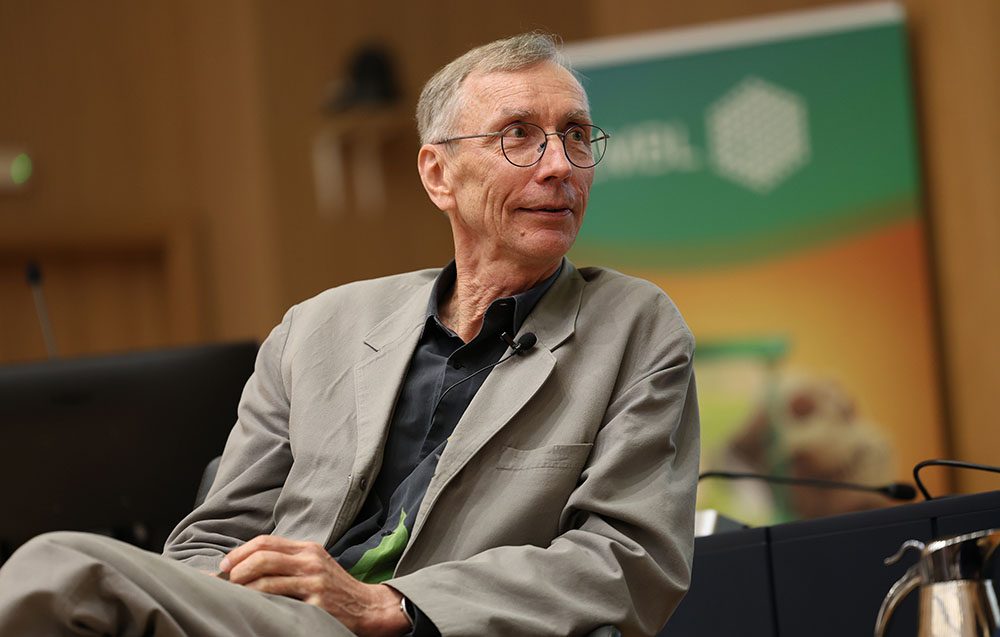
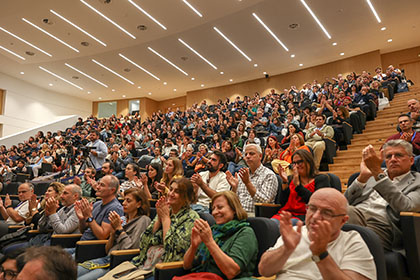
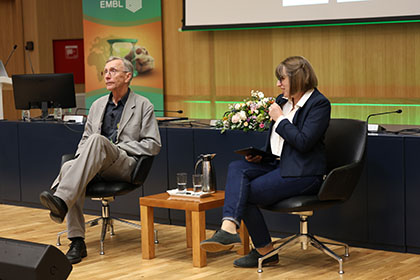
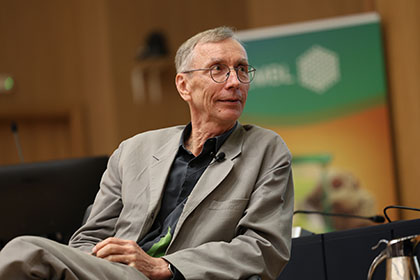
The 2026 Kafatos Lecture, organized by the European Molecular Biology Laboratory (EMBL) in honor of Fotis Kafatos, the distinguished Greek biologist and founding Director of the Institute of Molecular Biology and Biotechnology of FORTH (IMBB-FORTH), took place on 9 October in the new Auditorium of the Innovation and Advanced Education Hub of the Foundation for Research and Technology – Hellas (FORTH).
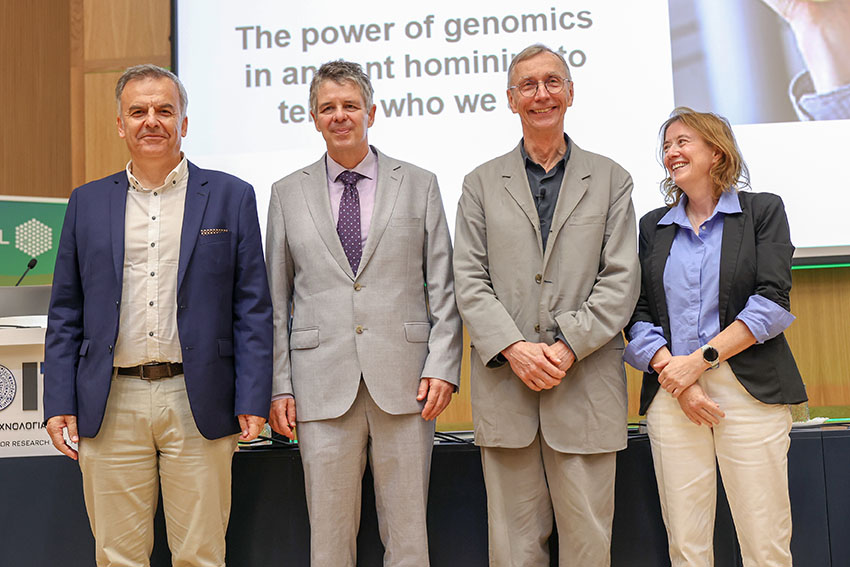
The lecture was delivered by Nobel Laureate Svante Pääbo, who presented “A Neanderthal Perspective on Human Origins and Health: How Ancient DNA Is Revealing New Insights into Disease and Biology.” Drawing on decades of pioneering research, Pääbo offered fascinating insights into how ancient DNA is transforming our understanding of human evolution, biology, and health.
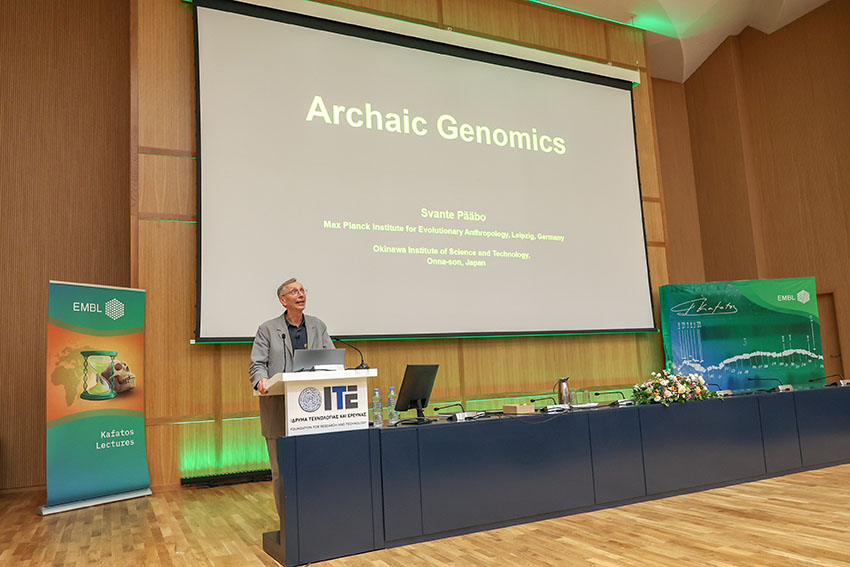
In his groundbreaking work, Pääbo and his team sequenced the first Neanderthal genome, revealed evidence of interbreeding between Neanderthals and modern humans, and identified the previously unknown Denisovans through DNA extracted from a small bone fragment discovered in a cave in Siberia. These discoveries have fundamentally reshaped our understanding of human origins and the genetic legacy of our extinct relatives.
A key focus of the lecture was the continuing influence of archaic human DNA on modern human health. Pääbo explained that people with ancestry outside sub-Saharan Africa typically carry approximately 2% Neanderthal DNA, with some inherited genetic variants continuing to influence biological functions and susceptibility to disease.
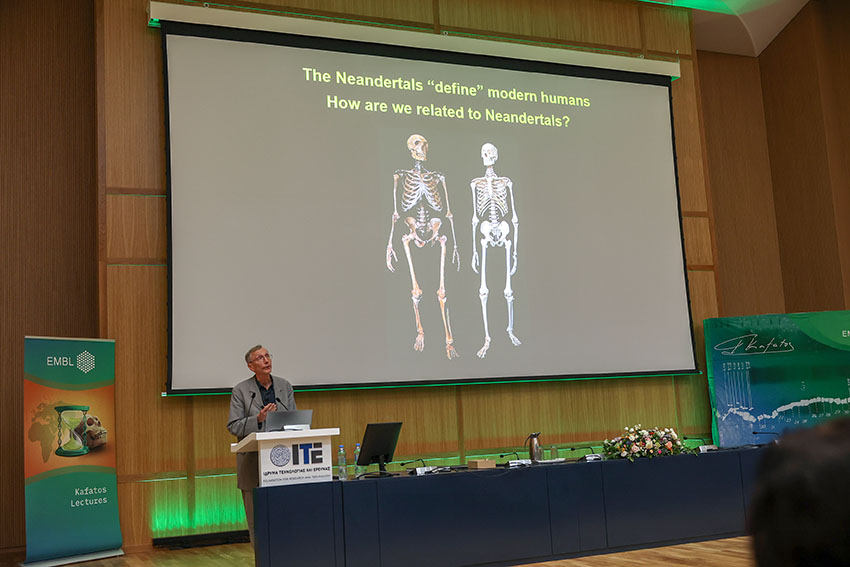
The COVID-19 pandemic provided a striking example of this legacy. A genetic variant on chromosome 3 inherited from Neanderthals was associated with an increased risk of severe illness following infection. Conversely, other archaic genetic variants may confer beneficial effects, including associations with reproductive health, a lower risk of miscarriage, and differences in responses to certain medications. The genetic contributions of Denisovans, meanwhile, offer further insights into human evolution and adaptation.
Beyond the scientific discoveries, the event celebrated the enduring legacy of Fotis Kafatos. During the opening remarks, Professor Vassilis Charmandaris, President of FORTH, highlighted Svante Pääbo's exceptional contributions to genome research and reflected on Kafatos's scientific legacy. He emphasized Kafatos's pivotal role in establishing and shaping FORTH as the founding Director of IMBB-FORTH, his international scientific recognition, and his contribution to the creation of the European Research Council (ERC).
Professor Nektarios Tavernarakis, former President of FORTH and current Scientific Director at IMBB, drew a moving parallel between Kafatos and a star: brilliant and luminous during its relatively short life, yet capable, at the end of its existence, of scattering the elements that give rise to new stars and, ultimately, life itself. This powerful image captured the enduring impact of Kafatos's scientific vision and the generations of discovery inspired by his work.
Professor John Vontas, Director of IMBB-FORTH, noted that Pääbo's visit coincided with the recruitment of researcher Dr Eirini Skourtanioti as scientific director of the Institute's Ancient DNA Unit. Building on the units ten years of successful research this recruitment will substantially strengthen ancient DNA research at IMBB and open new opportunities for investigating the evolutionary history of humans and other organismsEileen Furlong, Head of EMBL Genome Biology, introduced Svante Pääbo and presented him with a commemorative gift in recognition of his delivery of the 2026 Kafatos Lecture.
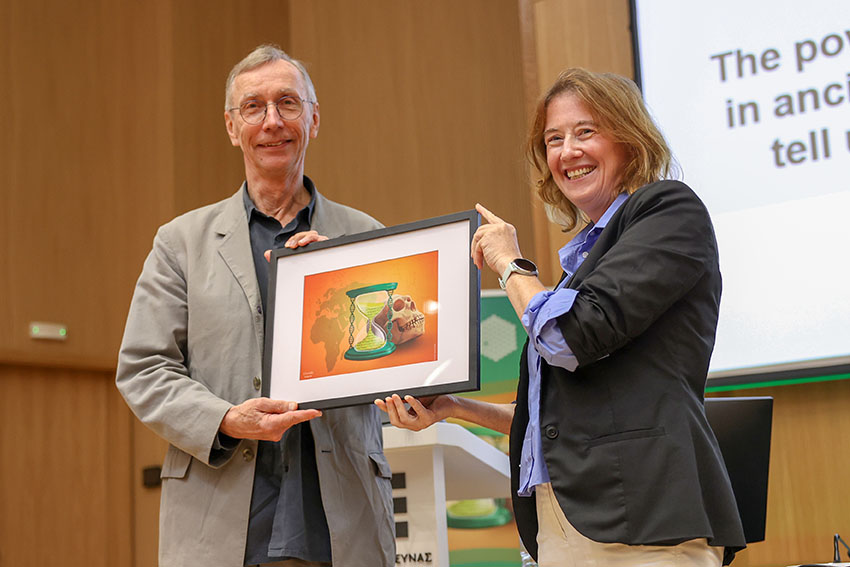
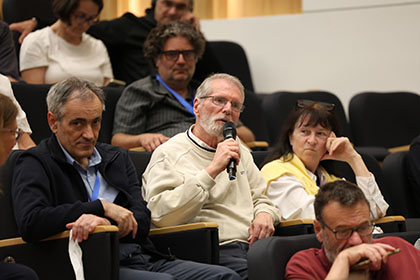
The lecture concluded with a lively question-and-answer session, giving audience members attending both in person and remotely the opportunity to engage directly with the Nobel Laureate and explore the scientific questions raised by his presentation.
Τhe 2026 Kafatos Lecture demonstrated the extraordinary power of ancient biomolecules to illuminate our past and deepen our understanding of human biology today.
A memorable celebration of science, collaboration, and discovery at IMBB-FORTH — honoring the legacy of Fotis Kafatos while inspiring new perspectives on human origins, evolution, and health.