





Highlights
View all Highlights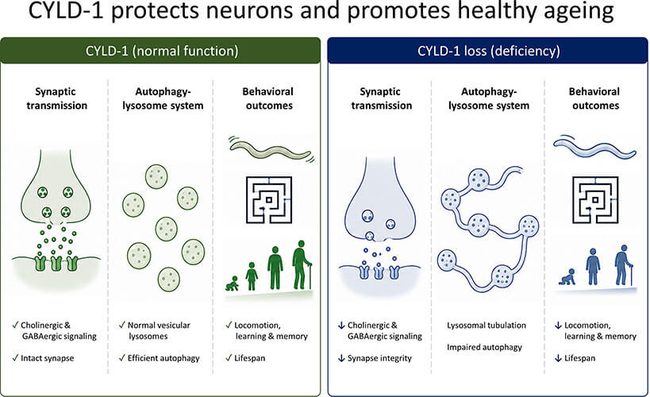
A new mechanism that protects the nervous system during ageing and promotes longevity
Research from the Tavernarakis group at IMBB is published as a featured article in Nature Communications. It reveals...
more...
In a News & Views article in Nature Cell Biology, Nektarios Tavernarakis comments on new insights into cancer therapy resistance
In a News & Views article published in Nature Cell Biology, Prof. Nektarios Tavernarakis discusses a recent study...
more...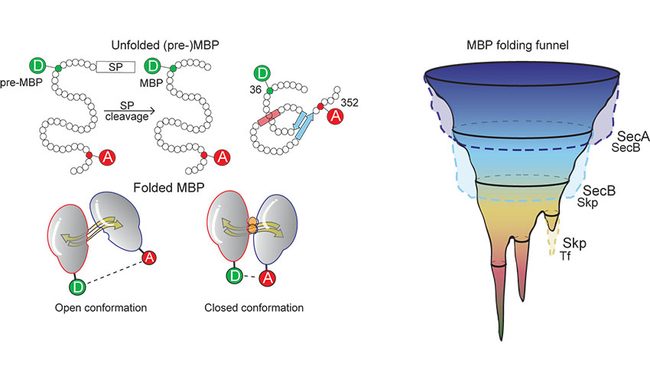

SMC1A/cohesin as a mediator of sex-biased immune responses
This study identifies SMC1A, an X-linked cohesin subunit and chromatin architectural factor, as a potential mechanistic link between...
more...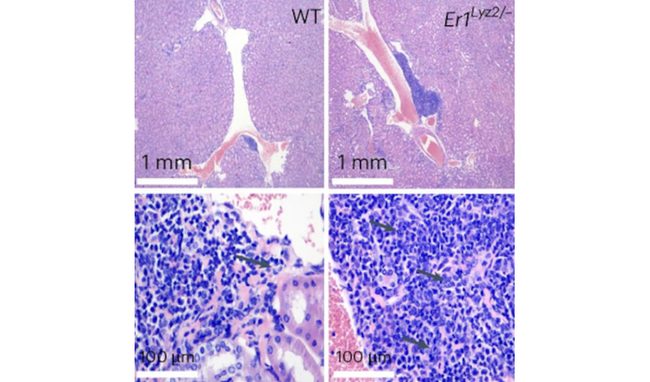
DNA damage in macrophages drives immune autoreactivity via nuclear antigen presentation
Researchers at IMBB-FORTH and the University of Crete show that DNA damage in macrophages triggers immune autoreactivity during...
more...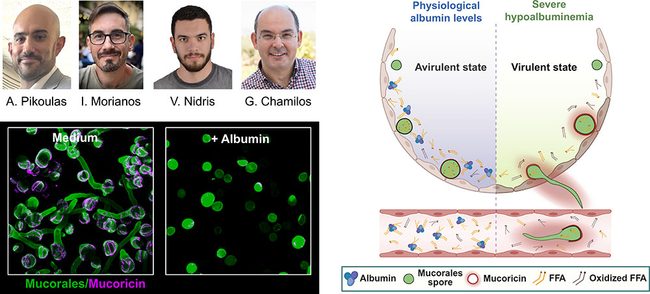
ALBUMIN: The most abundant human blood protein acts as a shield against deadly fungal infections
Scientists at the Institute of Molecular Biology and Biotechnology (IMBB-FORTH) and the University of Crete, together with collaborators...
more...[Nature] [Press Release]
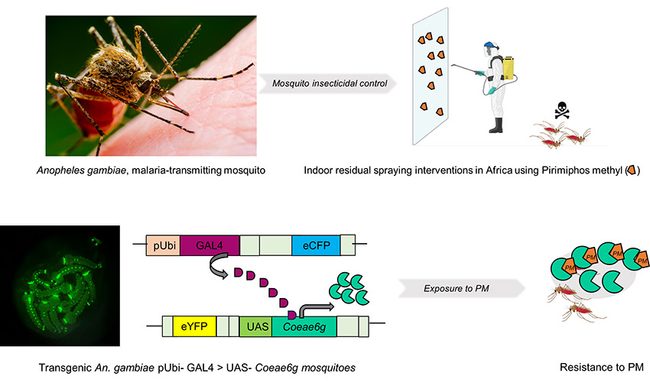
A novel carboxylesterase drives insecticide cross resistance in the malaria mosquito
IMBB researchers collaborating with LSTM, UK, applied a predictive chemoproteomic framework with activity-based protein profiling, identified and functionally...
more...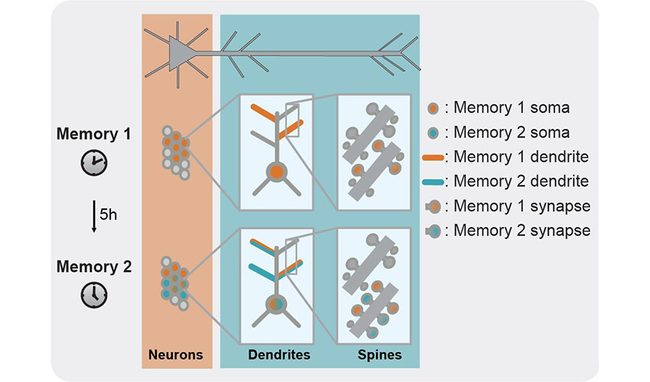
Dendritic plasticity links memories across time
How does the brain weave together subsequent memories? In a new Nature Neuroscience study, UCLA, Ohio State and...
more...News
View all News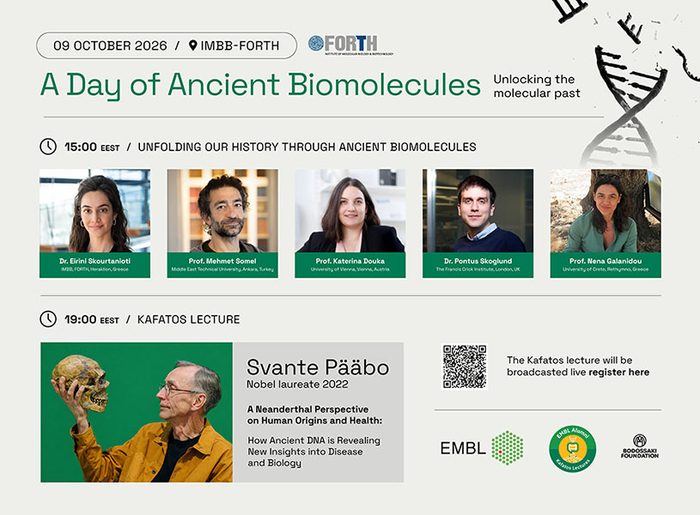
A day of Ancient Biomolecules at IMBB-FORTH
A day of Ancient Biomolecules at IMBB-FORTH, Heraklion/ October 9, 2026 Join us for a day of discovery at the IMBB, celebrating how ancient DNA and proteins illuminate the...
09.10.2026
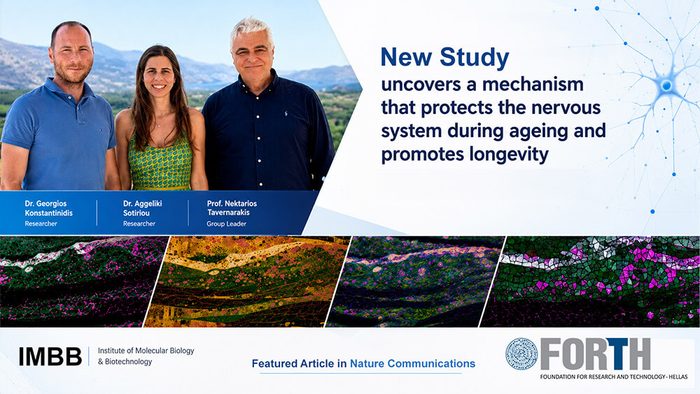
New study uncovers a mechanism that protects the nervous system during ageing and promotes longevity
Research at the Institute of Molecular Biology and Biotechnology (IMBB) of the Foundation for Research and Technology-Hellas (FORTH), published as a featured article in the international scientific journal Nature Communications,...
20.07.2026
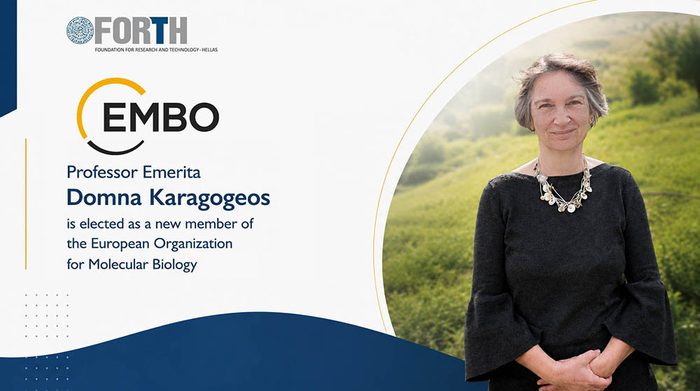
Professor Emerita Domna Karagogeos is elected as a new member of the European Organization for Molecular Biology (EMBO)
Domna Karagogeos, Professor Emerita of Molecular Biology-Developmental Neurobiology at the University of Crete Medical School and collaborating faculty member of the Institute of Molecular Biology and Biotechnology (IMBB) of the...
30.06.2026
IMBB has just published its Biennial Report for the years 2024-2025
Also available in hard copy upon request. ...
10.06.2026
Seminars
View all SeminarsIMBB Seminar
"Molecular physiology of reproductive behavior in B. dorsalis and its novel control methods"
Hongbo Jiang
Professor, Dean,
College of Plant Protection,
Southwest University,
China
Jul 27, 2026 @ 11:00
Seminar Room "St. Orfanoudakis”, FORTH’s bldg
Host: J. Vontas
IMBB Seminar
"Fate before gene expression: Epigenetic priming of cell lineages in the mammalian epiblast"
Miquel SENDRA ORTOLA
Postdoctoral Fellow
Institute of Developmental Biology of Marseilles, IBDM
CNRS/Aix-Marseille University
https://guignardlab.com
Jul 24, 2026 @ 13:00
Seminar Room 1 "Costas Fotakis”, FORTH’s bldg
Host: T. Pavlopoulos
IMBB Colloquium
"Genetics of adaptation to heart poisons in insects"
Marianthi (Marianna) KARAGEORGI
Postdoctoral Researcher,
IMBB-FORTH
Jul 17, 2026 @ 13:00 - 14:00
Seminar Room 1 "Costas Fotakis”, FORTH’s bldg
Joint Seminar Series in Translational and Clinical Medicine UoC Medical School - IMBB-FORTH – UCRC
"Near- and far-transfer effects of executive working memory training in man and mice: a translational study"
Stella Giakoumaki, Kyriaki Sidiropoulou
Stella Giakoumaki,
Professor of Clinical Neuropsychology, Laboratory of
Neuropsychology, Department of Psychology, UoC
Kyriaki Sidiropoulou,
Professor of Neurophysiology, Laboratory of Neurophysiology
and Behavior, Department of Biology, UoC
Platform: Link
Jul 15, 2026 @ 15:00 - 16:00
Online
IMBB Colloquium
"From insects to plants: Functional characterization of ACCase mutations"
Martha TSELIKA
PhD Candidate,
Kalantidis Lab
Jul 10, 2026 @ 13:00 - 14:00
Seminar Room 1 "Costas Fotakis”, FORTH’s bldg
IMBB Seminar
"Cryo-Electron Microscopy Reveals Molecular Remodeling During Neuronal Injury and Regeneration"
Naoko MIZUNO
Senior Investigator,
Laboratory of Structural Cell Biology,
NHLBI, NIH
https://www.nhlbi.nih.gov/science/laboratory-structural-cell-biology
Jul 03, 2026 @ 13:00
Seminar Room 1 "Costas Fotakis”, FORTH’s bldg
Host: M. Vidaki
IMBB Seminar
"Prosocial decision making in rodents"
Cristina MARQUEZ
Center for Neuroscience and Cell Biology,
CNC-UC. Coimbra University
Portugal
https://cnc.uc.pt/en/people/c-marquez
Jun 30, 2026 @ 12:00 - 13:00
Seminar Room 1 "Costas Fotakis”, FORTH’s bldg
Host: P. Poirazi
IMBB Seminar
"Tissue Biology of Chromosomal Instability"
Marco Milán
ICREA Research Professor,
Mechanisms of Disease Programme, Head
Institute for Research in Biomedicine (IRB Barcelona)
https://www.irbbarcelona.org/en/research/marco-milan
Jun 29, 2026 @ 13:00 - 14:00
Seminar Room 1 "Costas Fotakis”, FORTH’s bldg
Host: C. Delidakis
IMBB Colloquium
"Postnatal Maturation of Somatostatin Interneurons in the Hippocampus"
Sofia PETSANGKOURAKI
PhD Candidate,
Karagogeos Lab
Jun 26, 2026 @ 13:00 - 14:00
Seminar Room 1 "Costas Fotakis”, FORTH’s bldg
IMBB Colloquium
"ERF-based Prostate Cancer animal models"
Aikaterini VOURLIA
PhD Candidate,
Mavrothalassitis Lab
Jun 19, 2026 @ 13:00 - 14:00
Seminar Room 1 "Costas Fotakis”, FORTH’s bldg
Joint Seminar Series in Translational and Clinical Medicine UoC Medical School - IMBB-FORTH – UCRC
"Maintaining Cellular Memory: Mechanisms of Heterochromatin Inheritance in Mammalian Cells"
Antonis Tatarakis
Assistant Professor of Molecular Biology and Epigenetics
School of Medicine,University of Crete
Platform: Link
Jun 17, 2026 @ 15:00 - 16:00
Online
Partnerships - Spin offs - Links